
Where’s the Goal Post?
The best attendance my lodge ever had wasn’t planned.

The best attendance my lodge ever had wasn’t planned.
We had 96 members on the books. This was before we spent almost $40,000 upgrading our 4,000 square foot building from electric baseboard heat to central air. For about six months, we started enjoying cigars in our back storage room. Men would show up an hour before dinner to sit and have a stick, or in my case a pipe, just to fellowship. Then dinner. Then the meeting. Then back to the storage room to enjoy the rest of their cigar. We wouldn’t leave until sometimes 11pm.
Never in my time at this lodge have I seen more attendance or participation. And certainly not since.
Nobody surveyed those brothers about their sense of belonging. Nobody tracked a Net Promoter Score. The thing that produced the most engaged period I’ve witnessed was unplanned, unmeasured, and had nothing to do with any strategic framework. It was cigars and conversation. That’s it.
We talk often about the opportunities in Masonry. About success, about metrics for renewal. In certain circles, “problems and challenges” get repackaged as “opportunities for success.” The language shift isn’t nothing. It changes how we approach the work. But it dodges a question that doesn’t get asked enough.
What does success actually look like for a lodge? And would we recognize it if it showed up smelling like a La Aroma de Cuba?
The Bumper Sticker and the Wednesday Night
The easy answer is “Meaning and Masonry over member numbers and money.” It fits on a t-shirt. It sounds right. It probably is right, in the broadest sense. But it doesn’t tell you anything useful about Wednesday night.
The cigar story tells you something. For that period, that small act was what we gathered for. The meeting was still the meeting. The ritual was still the ritual. But the draw, the thing that got brothers in the door early and kept them late, was the simple pleasure of sharing something and sitting shoulder to shoulder for a spell.
The purpose was thin. It didn’t change the world. But it was shared, brothers knew what it was, and showing up delivered on it. A lodge that gathers around education will attract brothers who want to learn. A lodge that gathers around charitable work will attract brothers who want to serve. A lodge that gathers around fellowship and a good smoke will attract brothers who want exactly that.
The lodges that struggle are often the ones where nobody can articulate why you’d drive across town on a Tuesday night. The meeting exists because it’s always existed. The program is whatever the Secretary could arrange. The experience is attendance for its own sake. That’s not purpose. That’s habit. And habit isn’t enough to compete with everything else asking for a man’s time.
Purpose matters. But purpose is slippery. You can’t put it on a spreadsheet. Can you measure any of this? Does measuring it even matter?
Why Growth Can’t Be the Metric
I had a conversation recently about Shrine that clarified something for me. A brother was talking about growth strategies, recruitment numbers, ways to bring in more members. And I realized I had to push back.
I don’t want to grow Shrine. To focus on growth as a metric for success is to fail before we start. What I want is to reconnect Shriners with the core mission and the big “Why” behind it. That reconnection is the only thing that will naturally attract more brothers. And when they arrive, there will be something there for them that keeps them coming and makes the experience worthwhile.
The same principle applies to lodges. Growth as a goal produces bodies through the door. Connection to purpose produces brothers in the chairs. The order matters.
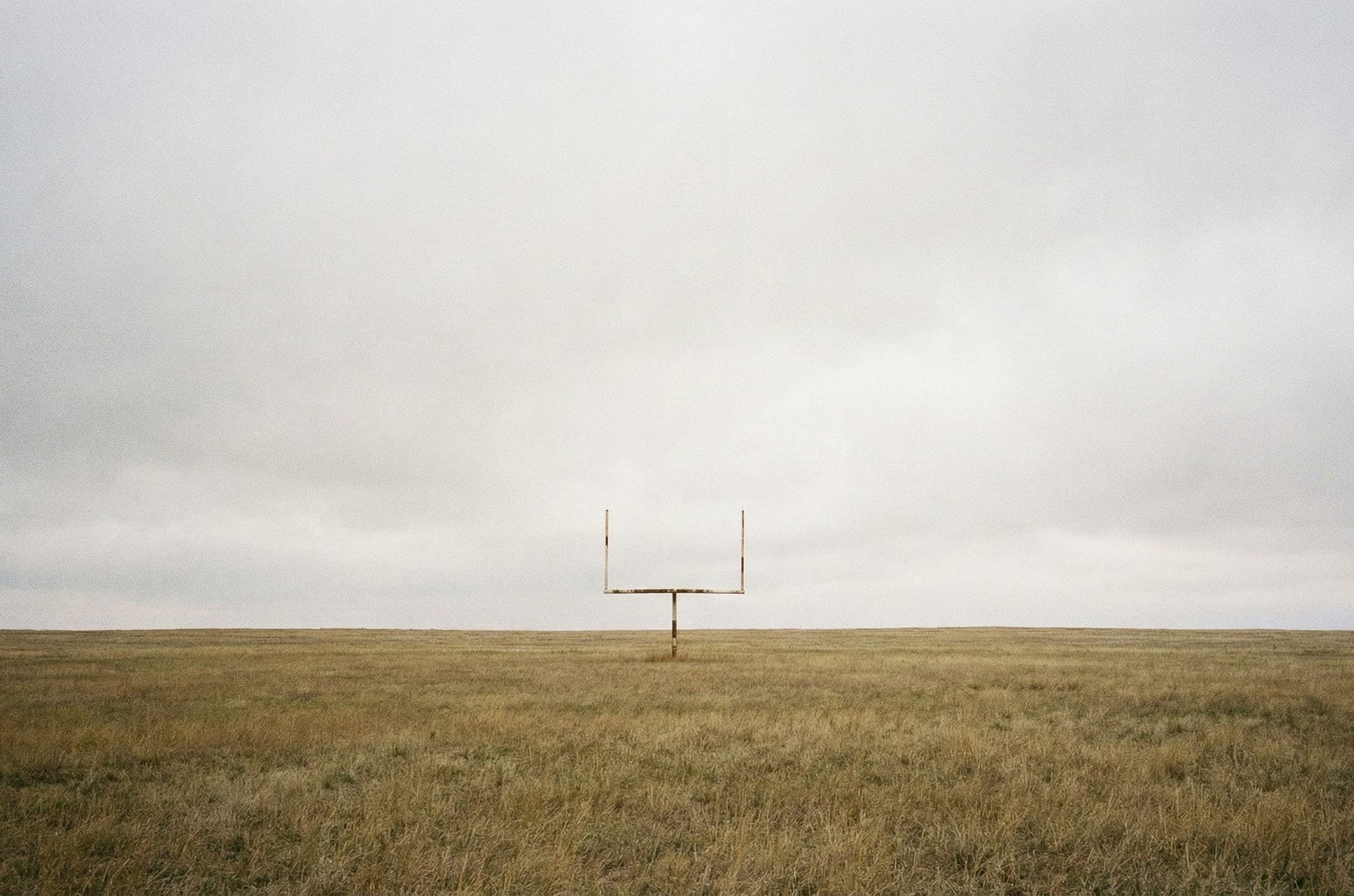
Leading teams, I used to be very intentional about where the goal post was. If my folks knew where the target was, they had something to aim at. They could apply the twenty-four inch gauge to their work and time in a way that let them feel accomplished at a certain mark. And once they hit it, they could choose to give more. The goal post provided orientation, not limitation.
The most common goal post in Masonry, membership numbers, has always been partially misleading.
The Math We Don’t Do
When I’ve asked around on various Masonic forums about what percentage of a lodge roster constitutes “active” participation, the consensus lands somewhere around 10%. If your lodge has 100 members on the books and you get 10 at a stated meeting, that’s considered normal. Maybe even good.
Think about what that means.
If your lodge was built in a time when you had 250 members, and today you have 45, and when guests visit you have to ask them to fill in as Tiler or Warden while the Senior Deacon also offers the Chaplain’s prayer, and that’s all very normal, you’re still operating in the 10-15% window. The participation rate hasn’t changed. The denominator has.
Church research tells a similar story. Church Answers categorizes members into four types: about 30% are “core” members who attend three or more times a month and do the heavy lifting, 25% are “marginal” who show up once or twice, 25% are “fading” members who attend four to ten times a year, and 20% are “cultural” members who come a few times annually just to maintain the identity. Even among active members, churches expect 30% to be absent on any given Sunday.
Someone could push back here. Those 250 members weren’t nothing. They showed up for degrees. They came to the annual dinner. They paid dues that covered the mortgage and kept the lights on. The 10% rule applies to stated meetings, but a healthy lodge might see 40% turnout for a Master Mason degree or a special event. Fair enough. The roster wasn’t pure fiction.
But the building was sized for that 40% showing up regularly, not occasionally. The kitchen was built to feed 100. The lodge room seated 150. The infrastructure assumed a level of sustained activity that the membership model never delivered. And now, with 45 on the roster, even a spectacular 50% turnout means 22 brothers in a room built for six times that many.
Most of those “lost” members were never active participants. They were names. They were dues. They were warm bodies at the occasional event. But they weren’t brothers in the chairs doing the work week after week. That 250-member lodge and your 45-member lodge might have similar numbers of people who actually show up and fill roles consistently. The difference is the building, the per capita, the insurance, and the expectations calibrated to a peak that existed for a moment in history and then passed.
But the constant participation rate sounds reassuring until you do the arithmetic on the absolute numbers. Ten percent of 250 is 25 active brothers. Ten percent of 45 is 4 or 5. Twenty-five brothers can rotate through officer chairs, absorb absences, carry the work. Five cannot. The rate is constant. The functional reality is completely different.
So “membership numbers” as a metric misleads, but “functional capacity” as a replacement only works down to a threshold. Below that threshold, the numbers matter again whether we like it or not.
What Measurement Can and Can’t Do
I did some research across grand lodge programs, leadership frameworks, nonprofit management literature, and lodges that have figured out how to thrive. The picture that emerged came down to a handful of observable conditions.
Brothers arriving early and staying late. Finances that don’t require survival fundraisers. Buildings that fit the membership rather than haunting it. Degrees delivered with enough skill to create the intended effect. Communication that happens reliably. Leadership distributed broadly enough that the loss of any one brother doesn’t collapse the operation. New members who feel welcomed and seasoned members who feel valued.
These things can be tracked. Attendance patterns reveal more than raw headcounts. Financial ratios tell you whether dues cover operating costs or whether the pancake breakfast is keeping the lights on. Maine’s guidance on lodge finances puts it plainly: dues and investments should cover predictable costs, and fundraisers should fund charitable work, not basic operations. The New York Lodge of Excellence Program builds several of these metrics into its scoring rubric. Kouzes and Posner’s leadership framework, which I taught for years, translates well to fraternal settings for assessing whether leadership is concentrated in three brothers or spread broadly enough to survive turnover.
None of that captures the cigar room. No framework quantifies the difference between a brother who shows up because it’s his night and a brother who shows up because he’s been thinking about it all week. It can’t tell you whether the “Why” is landing. You can surround purpose with data points and infer its shape from the outline, the way you’d trace the edges of something you can’t see directly. That’s useful. It’s not the same as seeing the thing itself.
Measure what you can. Act on what you find. Stay alert to the things the measurements miss. A lodge that surveys its members and does nothing with the findings hasn’t accomplished anything. But a lodge that only trusts what it can measure will miss most of what matters.
The Ten-Year Question
Purpose, measurement, functional capacity. None of it addresses the harder problem. A lodge can fill its chairs tonight and still be dying.
If your lodge has twelve active brothers and the youngest is 58, you have functional capacity. You can confer degrees. You can conduct business. You can have meaningful fellowship. But you’re also watching a countdown. In ten years, absent change, that lodge closes or consolidates. Not because it failed at being a lodge, but because biology doesn’t negotiate.
Some argue for small, committed groups focused on depth. Others push for broader recruitment to ensure sustainability. My read is that the tension between quality and quantity is somewhat false, but not in the way I’d like it to be. Quality does create conditions where growth can happen. A lodge that delivers meaningful experiences generates word-of-mouth. Brothers tell their friends. That part is true.
But quality alone doesn’t guarantee new members will walk through the door. The demographic pipeline has constricted. Younger men aren’t joining anything at the rates their fathers and grandfathers did. Fraternal organizations track this clearly. The Elks have lost 50% of their membership since 1980. Shriners dropped 50% since 1990. Rotary went from over 400,000 members in 1995 to around 330,000, with only 10% under 40. This isn’t a Masonic problem. It’s a civic participation problem that happens to include Masonry.
A quality lodge in a community with no young men interested in fraternity is still a quality lodge with a ten-year horizon.
Most lodge leaders don’t want to sit with that. It means doing everything right might not be enough. Purpose, measurement, dignified ritual, solvent finances, all of it can be present and the lodge can still face a closing date. Not because of failure. Because of math.
Success has to include something about succession. Not just whether you can fill the chairs today, but whether someone is coming up who can fill them in 2035. That’s harder to measure and harder to achieve. But ignoring it makes the rest of the metrics feel like arranging a room nobody will inherit.
Setting the Goal Post
So where does the goal post go?
Not at a membership number. Not at a single metric. And not at a place so distant that reaching it feels impossible.
Your lodge is succeeding when it has a purpose brothers can name, when showing up delivers on that purpose, and when the conditions for that experience are sustainable. It is succeeding when the finances are solvent without desperation, the work is done with dignity, the communication is reliable, and the leadership doesn’t depend on any one person. It is succeeding when there’s someone in the pipeline. When the youngest member isn’t also approaching retirement. When the lodge can imagine itself ten years forward and see continuity rather than conclusion.
These conditions can be observed. Most can be measured. They can also be achieved, which matters more than you might think. A goal post that can’t be reached isn’t motivation. It’s discouragement dressed up as aspiration.
The research doesn’t give us a single number that tells us we’ve won. What it gives us are reference points, enough of them to know whether we’re moving in the right direction. For brothers trying to apply the twenty-four inch gauge to their labor, that’s what a goal post is supposed to do. Provide a bearing.
And sometimes a bearing looks like a back room, a cigar, and brothers who don’t want to go home.
-Brother Rob
I write about Masonry because I believe in what it can be. If these essays resonate, my books go deeper: The Unfinished Temple, Candidate to Craftsman, and Square Thoughts (coming March 10th) are all available at my Author Page.
Very kind of you to share, thanks. TLDR: Membership numbers have always been the wrong goal post for Masonic lodges. The real measure of success is whether brothers can name why they show up, whether showing up delivers on that purpose, and whether someone is in the pipeline to carry it forward in ten years. Metrics like attendance patterns, financial solvency, and leadership distribution can help lodges orient, but no framework captures the thing that actually drives engagement, which often looks more like cigars in a back room than anything on a spreadsheet.
Great post Brother Rob! I hope each of our Lodges finds a purpose or meaningful "goal post" to rally around. Something that will continue to sustain them through time. I look forward to your next post!