
Guarding the West Gate:
Freemasonry’s Path to Survival

Author’s Note: This piece distills what I initially wrote in about 5000 words with rigorous academic support and integrity down into a critical argument for Freemasonry’s future. The data is stark, the stakes are high, and the path forward demands courage. Your attention will be rewarded.
The Numbers Don’t Lie
From 1959 to 2020, Freemasonry in the United States lost over 75% of its members, falling from 4.1 million to under 900,000. In Michigan, as of January 2024, 18,553 Masons have an average age of 67.74, with 66% over 60. The death-to-initiation ratio is a grim 4:1 or 5:1 in many jurisdictions.
Without change, collapse looms. These numbers are a death rattle: the cause of death is a loss of mystique.
The reflex is to lower barriers: streamline rituals, expedite initiations, fill seats. In the 1990s and 2000s, one-day classes processed hundreds of men at once, conferring all three degrees in a single day. Ohio’s 2002 event initiated 1,200 men, and within five years, one-day Masons comprised over 10% of the state’s membership. Other jurisdictions rushed to replicate this model.
Yet, a 2001 study showed retention rates hovered at 50%, meaning half of those 1,200 Ohio initiates, roughly 600 men, left. These efforts treated Masonry like a product to be sold in bulk, diluting its essence rather than strengthening it. The crisis is not just numbers: it is purpose.
Freemasonry fails to attract younger generations: only 14% of Michigan Masons are Gen Z or Millennials, compared to 42.6% of the U.S. population, while 66% of us are Baby Boomers or older, against 37% nationally. This is not natural aging: it is a failure to resonate.
I propose a counterintuitive solution: Freemasonry must become harder to join.
This is not elitism: it is restoring the semipermeable membrane that keeps a body healthy, a strategy grounded in the central truth of every secret society, every velvet rope, every forbidden fruit since Eden: scarcity creates value.
The Fragile Ideal of Competence
Freemasonry’s rituals, aprons equalizing status, officers earning roles through dedication, degrees fostering rational dialogue, craft a competence hierarchy where men meet on the level to pursue wisdom, not power. This design is rare and fragile, requiring mutual trust and a shared commitment to growth.
Yet, this balance is easily disrupted by a subtle but destructive force: members who believe they embody competence but operate with dominance logic, men who want the pin, not the point.
These individuals, convinced of their own expertise, prioritize control over collaboration. They may excel in ritual or rhetoric, mistaking performative skill for true mastery. When faced with genuine competence, peers who demonstrate superior knowledge, humility, or judgment, they perceive a threat to their status. Rather than engaging in the Socratic dialogue Masonry demands, they double down on dominance behaviors: dismissing ideas, monopolizing discussions, or, when challenged, withdrawing entirely, taking their ball and going home. This reaction betrays a fixed mindset, incapable of the humility required for growth.
Organizational research, such as Edgar Schein’s work on culture, underscores the danger: in voluntary groups, dominance drives out competence. Skilled members, valuing environments that reward excellence over ego, do not fight domineering personalities: they leave, taking their trust and talent elsewhere. These dominance-driven members are parasites on the host’s reputation, and the truly competent, those with options, will simply exit.
Why would a master swordsman train at a dojo full of flailing children? He would not. The lodge is left poorer, its culture eroded by those who mistook self-assurance for ability.
Guarding the West Gate requires vigilance against this deception. Investigation committees must probe beyond surface-level qualifications, testing for epistemological humility and dialogical capacity. Does the candidate welcome correction? Can he engage without needing to dominate? Lodges must also foster a culture where existing members are held to these standards, encouraging self-reflection and, if necessary, gentle correction. Failure risks a lodge dominated not by wisdom, but by the loudest voices, masquerading as competence.
The West Gate: Protecting the Core
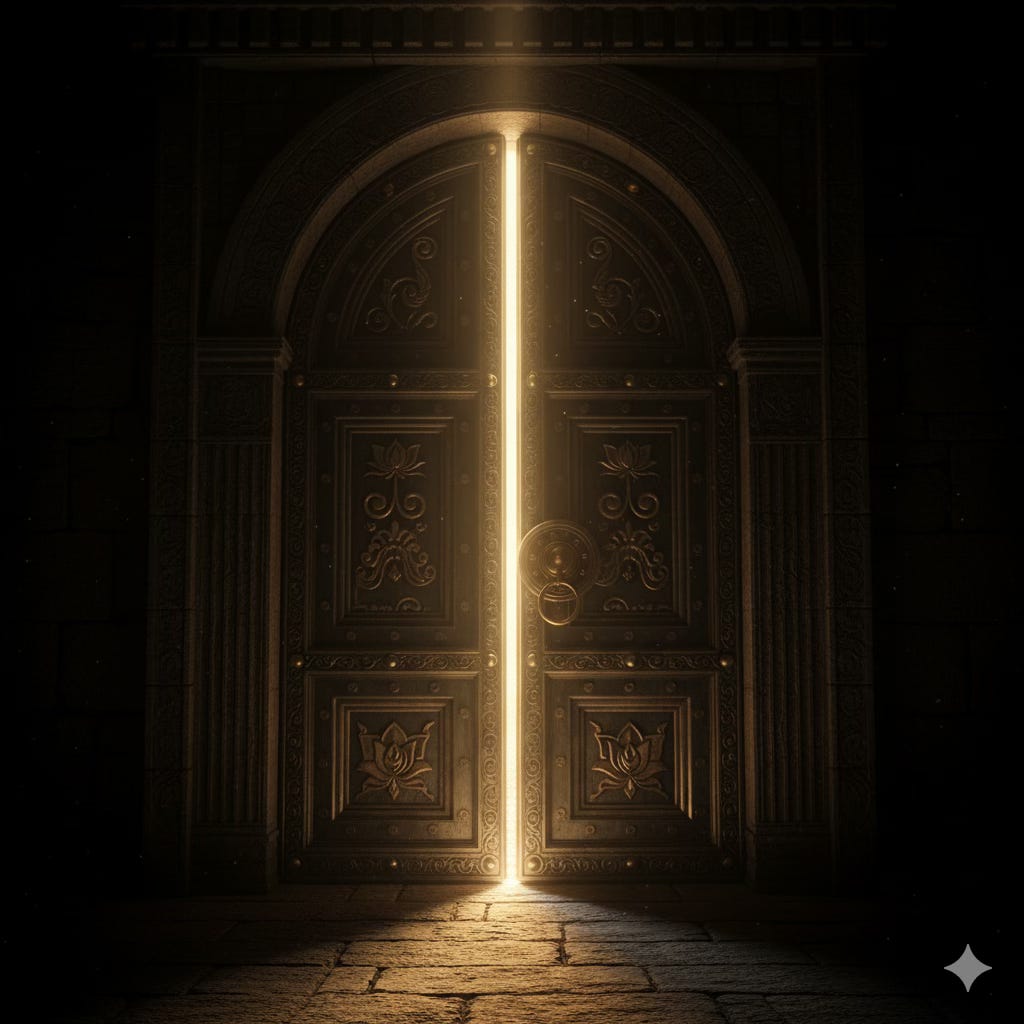
The West Gate is a threshold between dominance and competence. The Tiler’s sword symbolizes the need to protect the lodge’s culture, its cellular integrity. For too long, lodges have let in anyone with a pulse and a checkbook, and now the body is septic.
Investigation committees must assess candidates for:
Growth Mindset: Can they accept correction without defensiveness?
Rational Dialogue: Can they reason without dominating?
Long-Term Commitment: Do they value intrinsic rewards over immediate gratification?
Genuine Motivation: Are they here for self-improvement, or for status?
These questions require time: multiple meetings, honest conversations, and a willingness to say no. Rushing risks admitting members who degrade the lodge’s social capital, the trust that enables cooperation. One poor fit can drive away ten good ones, as competent members seek better uses of their time.
The Trap of Desperation
Declining numbers create pressure: empty chairs, tight budgets, aging members. Lodges may lower standards, seeing petitioners as quick fixes. This is the Icarus Paradox: survival tactics become self-destruction.
The question is not how do we grow, but what are we preserving?
A lodge of 100 uninterested men is less alive than one of 20 who embody the Craft. The choice is not just about survival: it is about identity. Is Freemasonry a Costco, with greeters and bulk discounts, or a speakeasy, with a password and a soul?
Scarcity Signals Value
Value stems from scarcity and effort. People do not line up for what is easy: they crawl over broken glass for what is exclusive. Lodges that vet carefully, over months, with tough questions, attract men who value commitment. Data shows lodges with high standards retained more members through the decline than those that did not. Indiscriminate growth in the 1950s led to mass exits by the 1970s, as uninvested members left.
Young men join CrossFit, philosophy groups, or dojos because they demand effort and deliver transformation. The better analogy is Fight Club: the secrecy, the rigor, the shared trial, that is the glue. You cannot advertise that on a billboard.
Gen Z is not avoiding organizations: they are avoiding irrelevance. A lodge with rote rituals and no intellectual rigor will not attract serious men.
Sustainable Selectivity in 2025
Guarding the West Gate means embracing:
Accepting Closures: Some lodges should merge or close. Fewer, stronger lodges are better than many weak ones.
Prioritizing Quality: One committed member who stays 40 years outweighs five who leave in three.
Valuing Rejection: Saying no protects the petitioner, lodge, and Craft.
Investing in Investigation: Vet candidates as thoroughly as performing ritual.
Honoring the Ballot: A single black cube signals a valid concern. In theory, yes: in practice, it can be a weapon for the petty tyrant, the very dominance personality we decry, to block a superior man. The system’s integrity relies on the integrity of its members, a classic catch-22.
Recruitment is about excellence. Vibrant lodges attract quality men organically. Find them in book clubs, dojos, or volunteer groups, and invite them to a lodge worth joining.
The Alchemist’s Choice
Masonry is alchemical: it transforms through discipline. The West Gate tests petitioners for humility and lodges for courage. The question is not survival at any cost: it is whether we will preserve what makes Masonry worth saving.
Lowering standards creates a hollow shell. Raising them builds a forge for refining gold.
Ultimately, the choice is simple: Is Freemasonry a social club or a mystery school? A VFW hall with aprons, or a Platonic academy for the soul?
-Brother Rob
Wow! What a masterpiece! Freemasonry is going through the same process here in Brazil. I am writing about the gerontocracy in Freemasonry and the urge of younger brothers to work towards a more exclusive and traditional Freemasonry.
Excellent and thoughtful piece, brother. Thank you for organizing the data and offering a nuanced and rarely heard solution.