The Unwritable History
What a Grand Master Knew in 1881

In 1881, the Grand Master of Michigan stood before his assembled brethren and apologized.
Not for any failure. Quite the opposite. The fraternity was thriving. Eleven hundred new members that year alone. Loans taken out not from desperation but because growth was outpacing the treasury’s ability to keep pace. His calendar was so full of Masonic engagements that he’d had to decline an invitation from the Grand Lodge of Wisconsin.
No, he apologized for something else entirely. He apologized for having to give a statistical report at all.
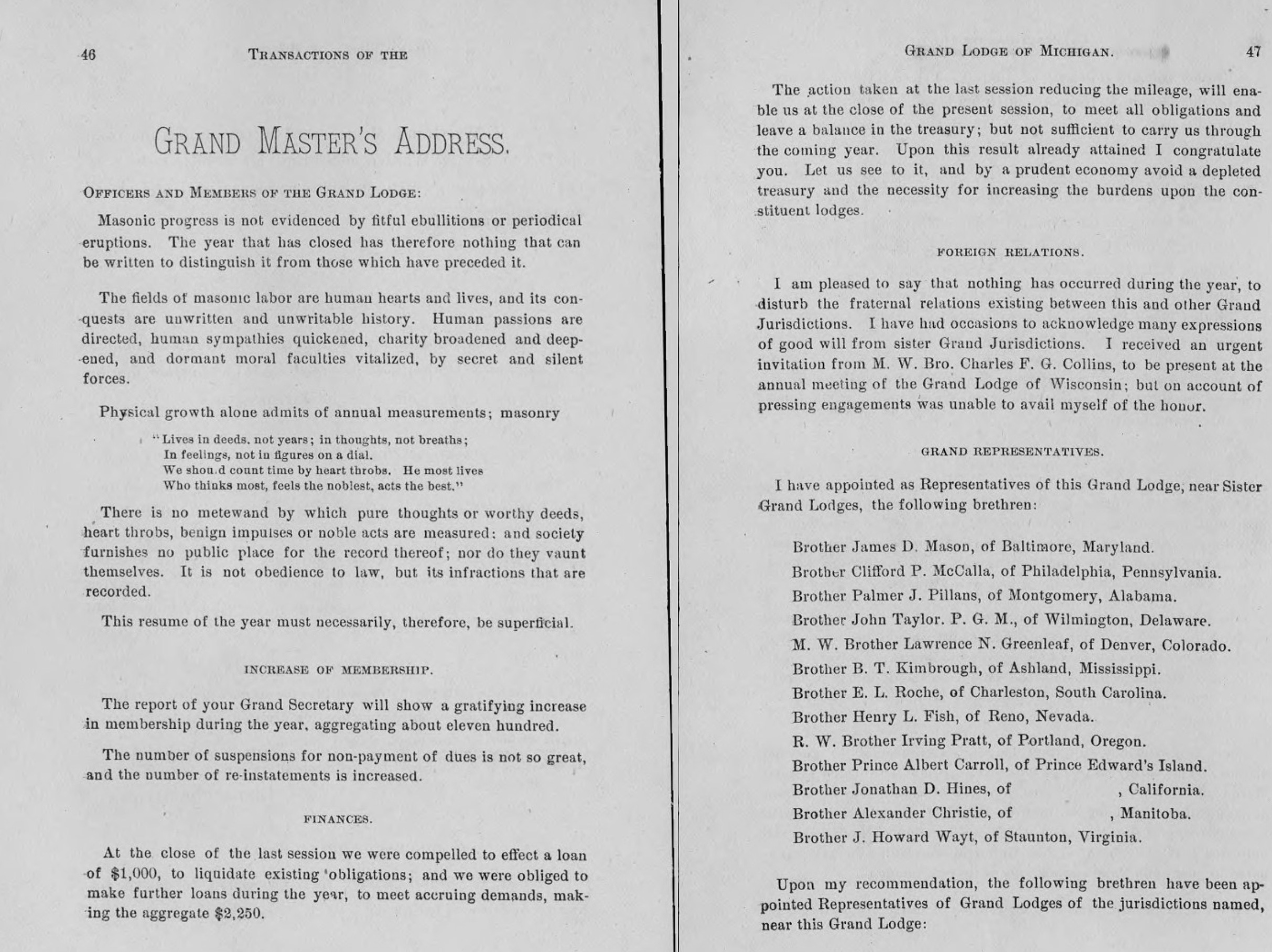
“This resume of the year must necessarily, therefore, be superficial.”
That word. Superficial. He used it deliberately, almost as a confession. As if to say: forgive me for reducing the Mystery to arithmetic.
The Man Who Counted
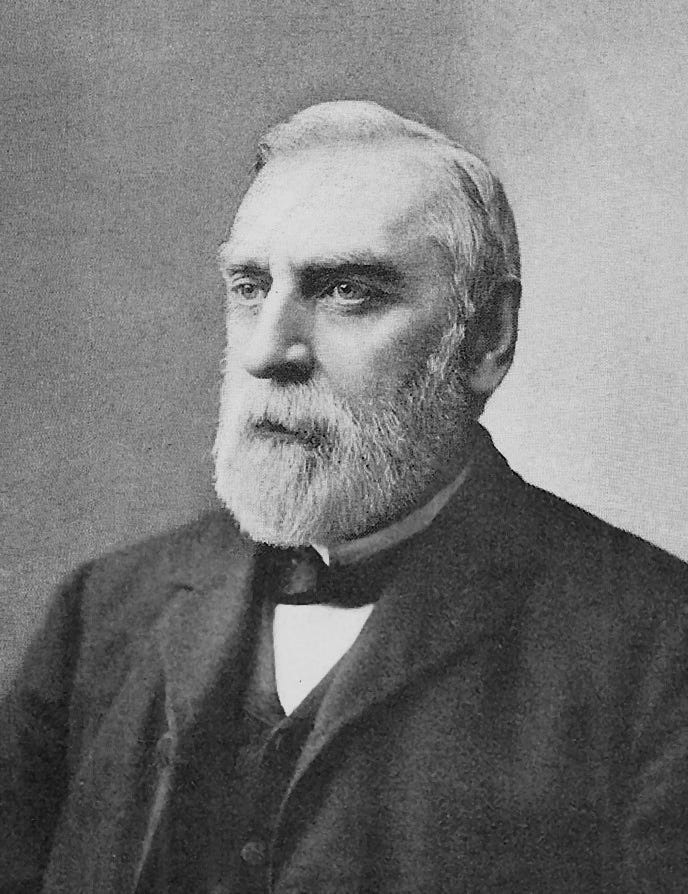
The Grand Master who spoke these words was Oliver Lyman Spaulding, and his biography makes the statement remarkable.
This was not some provincial lodge philosopher waxing poetic about mysteries beyond measure. Spaulding had spent his entire adult life counting things that mattered.
During the Civil War, he served as a captain in the 23rd Michigan Infantry, rising to colonel in command and earning a brevet as brigadier general. He counted soldiers, supplies, casualties. After the war, he served as Michigan’s Secretary of State from 1866 to 1870, counting votes, managing the machinery of democracy. He sat as a regent of the University of Michigan, counting the measures of institutional growth.
And in 1881, the very year he delivered this Grand Master’s address? He was simultaneously serving in the United States Congress, elected as a Republican from Michigan’s 6th district. He would go on to serve as Assistant Secretary of the Treasury under two presidents, eventually presiding over the first International American Customs Congress.
This was a man whose entire career was built on quantification. Soldiers. Votes. Dollars. Treaties. And yet, when he stood before the Grand Lodge of Michigan, he confessed that the numbers were the superficial layer. Necessary paperwork, yes, but not the substance.
Only a man who had lived by metrics his whole life could have earned the right to say so.
The Interior Work
What prompted this confession from a man who counted things for a living? Listen to how he opened his address:
“Masonic progress is not evidenced by fitful ebullitions or periodical eruptions. The year that has closed has therefore nothing that can be written to distinguish it from those which have preceded it.”
“The fields of masonic labor are human hearts and lives, and its conquests are unwritten and unwritable history. Human passions are directed, human sympathies quickened, charity broadened and deepened, and dormant moral faculties vitalized, by secret and silent forces.”
Read that again. Unwritten and unwritable history.
A Civil War general. A congressman. A future Treasury official. And he’s telling us that Freemasonry’s real work happens in a space no annual report can capture. That the Craft is primarily an interior technology, and the lodge room is just the laboratory.
He quoted a verse to underscore his meaning:
“Lives in deeds, not years; in thoughts, not breaths; In feelings, not in figures on a dial. We should count time by heart throbs. He most lives Who thinks most, feels the noblest, acts the best.”
And then immediately followed with this remarkable admission: “There is no metewand by which pure thoughts or worthy deeds, heart throbs, benign impulses or noble acts are measured; and society furnishes no public place for the record thereof.”
A metewand. An old word for a measuring stick. The man who would become Assistant Secretary of the Treasury is telling us: we have no instrument capable of detecting what actually matters.
The Inversion
Somewhere between 1881 and now, we flipped the script.
The things Spaulding said we couldn’t measure became the things we stopped trying to cultivate. And the things he listed almost as afterthoughts, the membership numbers and finances and appointments and mileage reimbursements, became the entire definition of institutional health.
His report dutifully includes the statistics: eleven hundred new members, $2,250 in loans, lists of Grand Representatives appointed to sister jurisdictions. But he frames these as the superficial layer. Necessary paperwork, yes, but not the substance.
Today we have inverted everything. When a lodge struggles, we ask about membership numbers. When a Grand Lodge meets, we discuss dues increases and building maintenance. We have become fluent in the language of the superficial and forgotten the vocabulary of the interior.
What would it even mean to report on “human passions directed” or “dormant moral faculties vitalized”? We no longer have categories for such things. The metewand was never invented, so we stopped believing the phenomenon existed.
The Secret and Silent Forces
There’s a phrase in Spaulding’s address that haunts me: “secret and silent forces.”
Not secret as in hidden from the profane. Secret as in invisible even to the participants. Silent as in working beneath the threshold of conscious awareness. He’s describing the actual mechanism by which Masonry transforms men, and admitting that it operates below the level of institutional observation.
Anyone who has sat in lodge and felt something shift, in themselves or in a brother, knows exactly what he means. The ritual does something. The fellowship does something. The symbols do something. But what they do cannot be captured in an annual report.
The Grand Master of 1881, a man who had commanded troops in battle, served in Congress, and would later manage Treasury operations, understood this. He built his entire address around this understanding. He was not embarrassed by the limitation; he was humble before it.
What We Lost
I spend a lot of time analyzing Masonic demographics. Tracking membership decline, modeling lodge sustainability, crunching the numbers that tell us which lodges will survive and which will close. This work matters. You cannot ignore the superficial layer entirely.
But reading Spaulding’s 1881 address reminds me that the numbers were never supposed to be the point. They were the shadow cast by something luminous. The real work was always happening in that space he couldn’t report on, in hearts changed, sympathies quickened, faculties vitalized.
We lost the ability to talk about this. We lost the vocabulary. We became so focused on what we could measure that we forgot there was ever anything we couldn’t.
And perhaps that’s the deeper diagnosis of our decline. We started believing the numbers were all there was. We stopped cultivating the unwritable history, and then we were surprised when the written history turned bleak.
The Invitation
A brother asked me recently what I thought could save Freemasonry. I didn’t have a strategic answer. No three-point plan, no marketing initiative, no dues restructuring.
What I said was this: we need to become the kind of institution that produces unwritable history again.
We need to do work in lodge that changes hearts, including our own. We need to create experiences that quicken sympathies and vitalize dormant faculties. We need to trust the secret and silent forces that our predecessors understood, even if we cannot measure them, even if they leave no trace in the annual report.
Oliver Spaulding knew how to count. He spent his life counting things that shaped nations. And when he spoke to his brethren, he told them the count wasn’t the point.
The question is whether we still believe that. And if we do, whether we’re willing to do the interior work that makes it true.
The fields of masonic labor are human hearts and lives.
May it be so again.
-Brother Rob