
Reluctant Diagnostician
Sunday Morning Reflection

I was reading Brother Shawn Eyer this morning. If you don’t know his work, the short version is that his résumé in Masonic scholarship is as distinguished as they come. Editor of Philalethes, the oldest independent Masonic research journal in North America. Editor of Ahiman, a journal that treats Masonic history and philosophy with the seriousness it deserves. His writing operates in the territory I most want to inhabit: early lodge orations, the initiatic tradition, the careful excavation of what our founders actually intended when they built this thing.
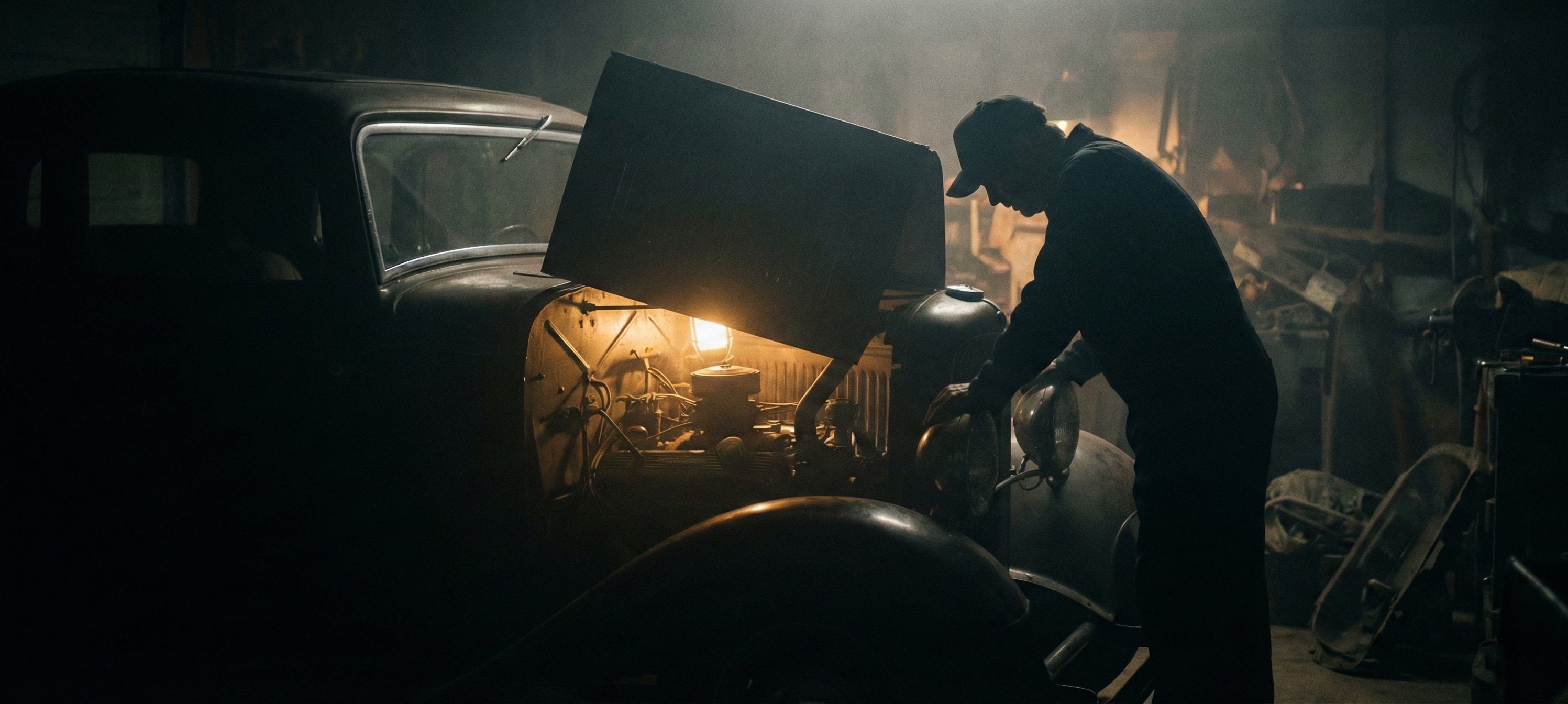
And I sat with a feeling I’ve sat with before, a kind of honest envy. Not of the man’s credentials, but of the clean lines of his subject matter. He gets to dwell in the cathedral. I spend most of my time under the hood.
There’s a useful comparison in American civic life. I’d call myself a constitutionalist, though not in the bumper sticker sense. I respect the document because I respect the difficulty of creating it. The compromises, the philosophical wrestling, the centuries of inherited thought that converged in a single framework for self governance. If you handed me a wand and asked me to conjure the most perfect interpretation of the Constitution, I’d give you a nation of maximum liberty, minimal overreach, high social trust, and a citizenry that understood the weight of what they’d inherited. That version of America lives in my imagination the way a cathedral lives in an architect’s sketchbook.
But I can’t get there by rewinding the clock. Nobody can. The nation I actually live in has accumulated two and a half centuries of interpretation, precedent, institutional drift, cultural change, and contested meaning. Wishing it were otherwise doesn’t change the GPS coordinates. You still have to drive from where you are.
Masonry presents the same tension, and I feel it constantly.
Those who know me personally understand that I’m drawn to the deep end of the pool. The mysteries, the allegorical history, the feeder tributaries of Hermeticism and Neoplatonism and operative guild tradition that were baked into the eventual formation of organized Freemasonry. I study the esoteric dimensions of the Craft the way some people study theology: not as a curiosity, but as a practice. If you told me I could spend the rest of my Masonic life writing only about the initiatic tradition, the philosophical architecture of the degrees, the meaning embedded in our symbols when they still carried living force, I would take that deal without hesitation.
My book releases on March 10th. It’s named after my Substack, Square Thoughts, because it collects roughly the last hundred essays, organized by topic and heavily edited to strip the blog cadence and read in a more consistent voice chapter to chapter. If someone were to read only that collection, they would reasonably conclude that my main contribution to the Masonic conversation is sounding the alarm. Blood in the water. Storm on the horizon. The sky may not be falling, but the roof has some holes in it.
I never set out to be that writer. I’ve been guilty of calling the bureaucratic inertia of most Grand Lodges, and those who fall victim to it, self licking lollipops. I understand that sounds harsh. Sometimes a harsh observation, well timed, pierces the static white noise of self congratulation we walk through without noticing. I spent enough years in uniform to learn that the right blunt sentence, placed at the right moment, accomplishes what three polite memos cannot. That habit followed me ashore. And I recognize that some of what I write, taken out of context, could read as the words of someone who has given up on the fraternity.
Anyone who reads the full body of work knows nothing could be further from the truth. My deepest aspiration is to be a traditionally observant, well studied, well spoken participant in the most charitable, most serious, most carefully developed form of Masonry available. I want the lodge room to feel like it did when the words meant something to every man in it. I want the ritual performed with the gravity it was designed to carry. I want the education to go deeper than a five minute talk before we pay the bills.
But none of that is reachable when I look at modern Masonry honestly. Brother Eyer has described the condition of lodges that have lost their animating purpose, that continue to meet because they have always met, but have shed the substance that once justified the gathering. The more I learn about the overlapping factors driving Masonic decline, the more I see how disconnected it would be to simply advocate for a return to some romanticized, allegorical, prewar version of the Craft. Even if I believe the fraternity was at its best prior to the mid twentieth century. Even if, given the choice, I might flip that switch.
We don’t have teleportation. We don’t have time travel. What we have is the GPS problem.
You set your destination. You imagine the lodge you want to belong to, the fraternity you want to hand to the next generation. That destination is the goal. But the very next thing the system requires is your current position. Where are you standing right now? And then it calculates the route, including the elevation changes, the construction zones, the stretches where conditions will get worse before they stabilize.
Every lodge is a vehicle traveling toward a destination of its own choosing. What I’ve discovered through a year of conversations with lodges across this country is that most of them haven’t chosen a destination at all. The default setting is to keep next year looking like last year. Maintain the status quo of the status quo. Lose a few more members. Defer the hard questions. Protect the familiar. The result is a slow shedding of investment and humanity until you’re left with the form of a lodge but little of the substance.
I’m unlikely to gather the members of my own lodge tomorrow and declare us traditionally observant or adopt some other moniker that instantly changes our trajectory. For most lodges, I suspect the same is true. The switch doesn’t flip that cleanly. And so I write about what I see, because what I see is the thing that needs attention before the deeper work becomes possible again.
The lens I write through wasn’t one I chose deliberately. I’ve spent enough years rebuilding teams of adults through the predictable stages of group development, over and over, to recognize the patterns when they appear in a new setting. That experience, combined with the systems thinking that comes with years of mechanical troubleshooting and root cause analysis, means that when a problem presents itself, I cannot look away from it. I don’t enjoy diagnosing decline in something I love. I would much rather focus on the depth that Masonry once carried and still carries when you choose to look for it. But when the patterns emerge and a problem sits in front of me, I have to be a problem solver. Even if nobody else sees it yet. Even if the solving requires saying things that need explanation, or that sting before they help.
That’s the tension I live in. The idealist who reveres the tradition and the pragmatist who knows you can’t restore it by pretending the road is clear. Both of those instincts are mine. The writing reflects whichever one the moment demands. And right now, the moment demands diagnosis more than it demands philosophy, not because I prefer it, but because the patient is still in the room, and the patient is worth saving.
-Brother Rob
Thanks for reading. I spend a lot of time reflecting on how the tools of our Craft apply to daily life and the future of our lodges, and I occasionally put those thoughts into books:
The Unfinished Temple – 33 meditations on turning our ritual into practical instruments for daily life.
Candidate to Craftsman – A short, honest daily reflection for the man who wants to live the Craft, not just memorize it.
Square Thoughts (Coming March 10th) – A field guide for lodge officers working to rebuild and renew our fraternity.
If you’re interested in exploring further, you can find them all at his Author Page
"Only put off until tomorrow what you are willing to die having left undone." - Pablo Picasso
Sometimes when you see things from angles and abstracts that others may struggle to perceive it is your responsibility to share what is witnessed. What others may choose to do with it, or not, is not of concern. Honoring the first charge is what matters.
My wife reminded me today of a quote that I have often reflected on. "All it takes for evil men to succeed, is for good men to do nothing." Sometimes it is merely the act of doing what is right that renews the equilibrium of the world around you. Sometimes it is communicating the things that need to be said, even if they are not always well received. Sometimes they are meant to be viewed after things have gone off rails, as a beacon back to the path.
Keep up the Great Work Brother.