Permission
Nobody is going to stop you.

Yesterday I published the numbers. Ninety-seven brothers on the roster. Seventy-one never attended a single meeting in twelve months. The thirteen who show up regularly average ten years of service. The seventy-one who do not average twenty-eight. The correlation between tenure and attendance is negative, meaning the longer a brother has been a Mason, the less likely he is to walk through the door. I laid all of that out in a piece called “Left on Read,” and my inbox responded the way it always does. Brothers from all over the country telling me they see the same thing in their own lodges. Grateful that someone said it. Still waiting for someone to say what comes next.
So let me say what comes next.
You have permission.
The brothers whose traditions you are protecting are not in the room. They are not in the building. They have not been in the building for years, in some cases decades. You are rehearsing their preferences for an audience that is not watching. You are preserving the way things have always been done on behalf of men who could not be bothered to show up and do them.
Every Mason took an obligation. He knelt at the altar and made promises. Among those promises was a commitment to support his lodge and attend its communications when properly notified. That obligation runs in both directions. He made it to you and you made it to him. When a brother has been properly notified ninety times across every medium available, by email, by text, by written letter with a stamped return envelope, and has not responded once, he has told you where he stands. When someone shows you who they are, believe them.
So who is left holding the weight? Five guys. Maybe six. The brothers who cook the meals, set up the chairs, open the lodge, handle the correspondence, pay the bills, and drive through the snow on a Tuesday night in January because they said they would. Those brothers did not earn their authority through seniority. They earned it through presence. Through consistency. Through being the ones who did not leave.
And those brothers have the right to decide what this thing becomes.
I want to be careful with that claim because I know how it sounds. It sounds like I am saying we should abandon the landmarks, throw out the ritual, and turn the lodge into a social club. I am not saying that. The Grand Lodge requires you to open and close in due form, handle your minutes, and conduct the business of the lodge. None of that is going away, and none of it should. The form matters. The obligation matters. The work matters.
What does not matter is the two hours of empty programming between the opening and the closing that nobody asked for, nobody attends, and nobody would miss.
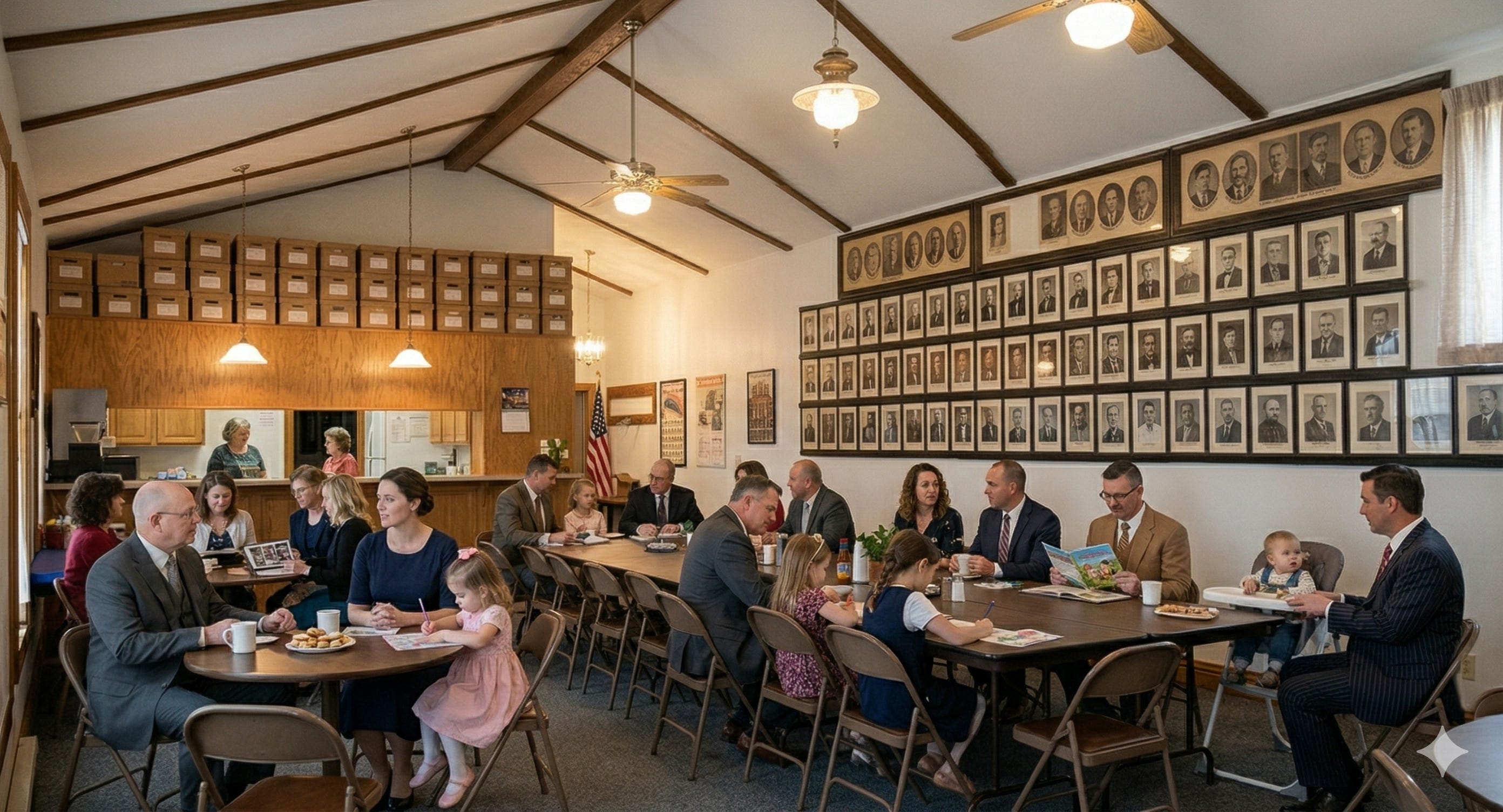
Think about what a lodge meeting could look like if the five guys who actually show up built it for themselves instead of for the ghost membership. A family dinner. Wives, kids, the whole household. Everyone eats together. Then the brothers step into the lodge room, open in form, handle the business, close in form. Fifteen minutes. Maybe twenty. Then they walk back out to their families and spend the rest of the evening in actual fellowship with the people they care about.
That format would produce more togetherness in one evening than most lodges generate in a year. And it would do something else. It would make the lodge visible. Families would talk about it. Kids would grow up knowing what the lodge is, not as a mysterious building their father disappears into once a month, but as the place where their family goes to be with people they like. That is how Masonry grew in the first place. It grew through households, not through membership drives.
I can already hear the objections. The lodge room is tyled. Families cannot be present during the business. You are absolutely right. They cannot be present during the business. So you do the business behind a closed door for the fifteen minutes it actually requires, and then you open the door again. The Grand Lodge does not mandate a two-hour meeting. It mandates the form. Honor the form, handle the work, and then get back to the people who actually showed up.
Someone will say this cheapens the experience. That the lodge meeting should be something set apart, something elevated, something men look forward to as distinct from their daily lives. I will not begrudge that position. But I will ask: elevated for whom? The brother who drives forty miles each way to sit in a room with four other people and run through an agenda built for fifty? The Secretary who sends communications to ninety brothers and gets five responses? Is that the elevated experience we are defending?
The brothers with twenty-eight years of average tenure had that elevated experience. They had the big rooms, the full officer lines, the degree teams, the ladies’ nights, the father-son banquets. And they stopped coming. Whatever that experience was, it did not sustain their participation. It did not even sustain their interest. We know this because we measured it.
So we can keep running the program that did not hold their attention, for a room that gets emptier every year, out of deference to men who will not return the courtesy of a reply. Or we can build something that works for the people who are actually here.
Nobody is coming to stop you. The brother with thirty years on the books and zero meetings on the register forfeited his say with his absence. The Grand Lodge is not going to intervene because you started having dinner with your families before lodge. Your District Deputy is not going to write you up for a fifteen-minute business meeting conducted in proper form.
The only thing standing between you and a lodge that actually fits your life is the weight of inherited expectations from men who have already put theirs down.
You have permission to pick yours up differently.
-Brother Rob