
Fast Fashion Masonry

I watched a video recently about a dress.
The narrator introduced us to Kay Washburn, a teenager in the 1950s. Kay spent 50 hours babysitting to earn enough money to buy a single dress. She wore that dress for years. She mended it. She tailored it. It became part of her story.
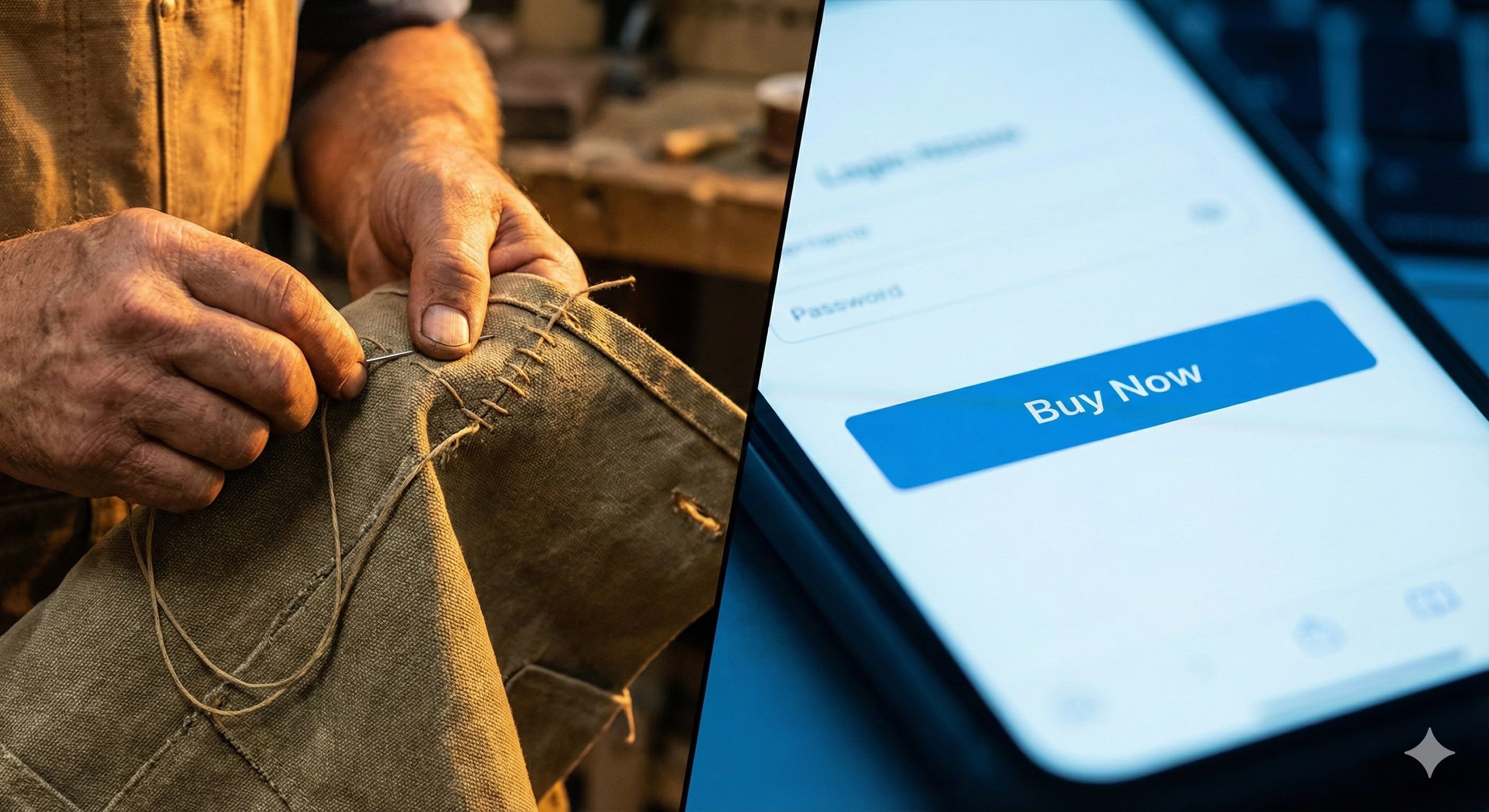
Then the video cut to the modern equivalent: someone tapping a screen to buy a pair of $5.95 pants from a fast-fashion retailer. The buyer purchases without thinking, wears the item once, maybe, and discards it the moment a button pops or the trend fades.
Over the last 50 years, we shifted from a culture of Makers to a culture of Buyers.
I see the same thing happening in our Lodges.
When you spend 50 hours working for a dress, you value it. You take care of it. If it tears, you learn to sew because the replacement cost is too high to ignore.
For centuries, Freemasonry worked the same way.
To become a Master Mason was a grind. Memorization. Patience. Waiting periods. A candidate had to prove proficiency before taking another step. Because the price of admission was high, the retention was high. You don’t walk away from something you spent six months building.
Lately we’ve made the purchase frictionless.
One Day Classes. The rush to join every appendant body before understanding the Blue Lodge. Brothers who collect titles and lapel pins like items in an online shopping cart, looking for that quick hit of status without the labor that gives it weight.
When something costs you nothing, you treat it like it’s worth nothing. Same as the $5 pants.
If you can become a 32nd Degree Mason in a weekend with a credit card swipe, why would you show up to a stated meeting to discuss the electric bill? If the title is cheap, the experience feels disposable.
The video noted that economic shifts are forcing people to stop buying cheap junk and start buying fewer, better things. Inflation and tariffs are making us intentional again whether we like it or not.
This might be good news for Freemasonry.
We are a bespoke tailor shop in a world of polyester knock-offs. We specialize in slow growth. Making good men better has never been quick or efficient. It’s not supposed to be.
Men today are starving for something that requires effort. They’re tired of things that come easy and mean nothing.
Look at your Masonic resume. You might be a Past Master, a High Priest, a Knight Templar, a 33rd Degree. Ask yourself: did I buy this, or did I build this?
If you have a title you received just by showing up and paying a fee, that’s fast fashion. It might look good on the hanger, but it doesn’t fit. You know it doesn’t fit.
Pick one degree or title you already hold but feel shaky on. Commit to relearning the lecture, understanding the history, serving in that role with renewed intention. Tailor the suit you already own so it actually fits your frame.
In a consumer culture, when something breaks, we toss it and buy a new one.
Lodge meeting is boring? Conflict with a Brother? The consumer walks away. I’m not getting my money’s worth. I’ll just go join the Shrine instead.
A craftsman looks at the same situation and thinks: I have the tools. I can fix this.
Identify one friction point in your Lodge. A stale education program. A dirty dining hall. A widow nobody’s called in six months. Don’t complain about it. Don’t escape to a different event. Fix it.
The world wants to make things easy for you. Resist it.
The next time you mentor a candidate, don’t give them the abridged version. Don’t rush them through. Tell them this is going to be hard, and that’s why it will matter. Make your approval something worth earning.
We can continue trying to sell Freemasonry as a cheap commodity. A social club with a cool logo that fits into your busy schedule. We can keep lowering the price until there’s nothing left worth buying.
Or we can offer something that costs time and ego. Something you can’t tap a screen and purchase.
The world is full of cheap stuff.
Build something that lasts.
-Brother Rob
I think the mindset of checking the box has us forgetting that not everything can be easily accomplished or achieved in short order. The desire to have everything now, in the moment, often cheapens or degrades the end result.
I agree we should not devalue the experience by reducing its cost or expediting the process. Your points are well made that we must ensure the price we demand, our candidates and Brethren’s time and resources, is met by fair value in what we offer.
I find it concerning to occasionally hear some claim that raising dues and becoming more exclusive will resolve our problems, unless we increase the value of what they are receiving along with the cost.
Our Scottish Rite makes you a 32nd Degree after a single reunion, but you have a passport book that records the degrees you have actually seen. When it's filled up you get a medal. However, each reunion is only good for four stamps, so you have to see the degree AND it has to qualify during that reunion. It's a good compromise that allows both full membership and an incentive to see each degree, often multiple times.
I just made Junior Deacon after a couple years of having to prove myself during rehearsal meetings, regular attendance, serving as Junior Steward, and filling in for other roles when those men were absent. The appointment certainly had meaning to it after all that other work.
There's a certain mindset of competition and credentialism people are caught in, especially among the upper middle class: higher and higher academic degrees, more certifications, more tickets punched to be competitive. Yet we often confuse the metric for what it is supposed to measure, so now we have academic degree inflation and mills where you just get the award without the work, because people demand it. Maybe we need to step back from this "credential creep".
An example in my jurisdiction is a proposal to have "past district deputy grand master" become a permanent title for those who previously served as such. It keeps getting voted down by huge margins: the masons here know that one more title, especially of an appointed position, dilutes the concept of titles to begin with.