
A Ghost in the Machine Asked About the Bill
Holding Up the Mirror

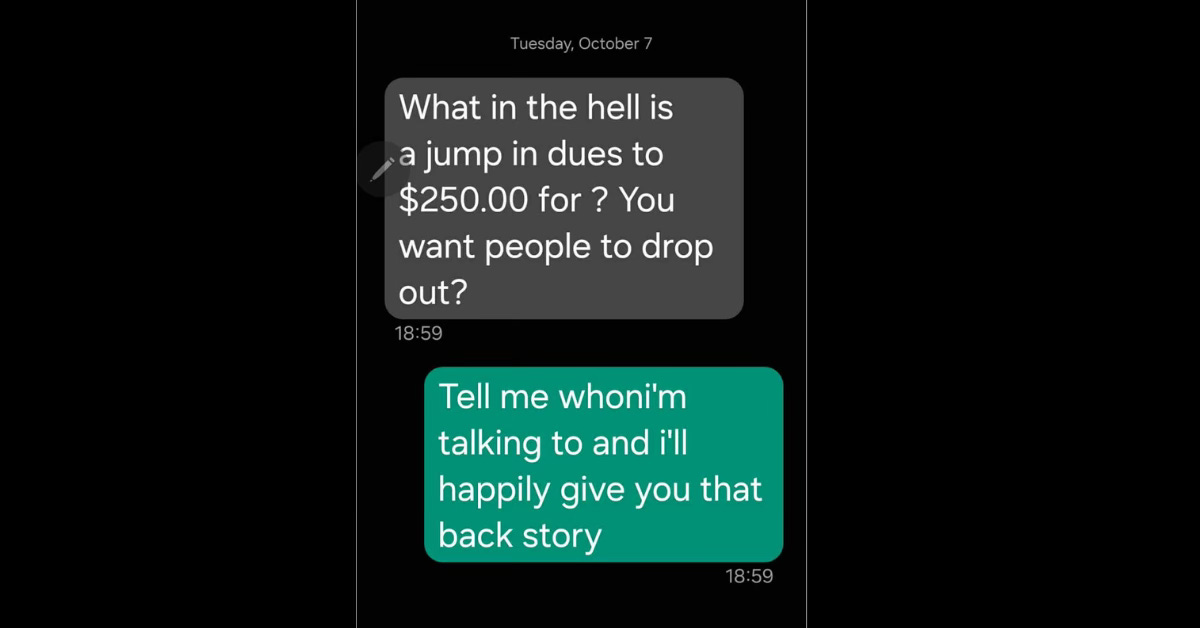
Tuesday, 6:59 PM. My phone lights up with a text from a number I don’t have saved.
‘What in the hell is a jump in dues to $250.00 for? You want people to drop out?’
The gauntlet is thrown. The ghost in the machine, rattling its chains from the ‘back forty’ to complain about the upkeep on a house he doesn’t visit.
But let me be clear. This is not an indictment of the brother who is housebound, or the one who moved across the country but still reads the minutes with interest. Their dues often arrive with a note of encouragement. They are brothers in spirit, engaged in the way they can, and we love them for it. This is about a different kind of absence. The absence of respect.
My first instinct was to match his energy. To ask who the hell he thought he was. But then the craft kicks in. My obligation as a Mason is to “whisper good counsel in his ear and in the most tender manner, remind him of his faults.”
So I chose alchemy over anger.
“Tell me who I’m talking to and I’ll happily give you that back story,” I replied.
He played his best card immediately:
“First name Last Name, PM. when I joined dues were $45.00… I’ve been a Mason for 33 years, my dad, 3 uncles, my grandfather and great grandfather were masons. Maybe I’m the last.”
He invoked his lineage like a dynastic claim to a throne he’d long since abdicated. He thought his legacy gave him a voice. Ironically, his legacy is exactly what proves him wrong.
I took a breath and responded:
“Worshipful brother First Name… I’m very glad you shot me a message… we missed you at the car show! It’s a big jump taken out of context for sure… I understand the shock… Can I send you an email walking you through the history?”
Later, I followed up:
“In the meantime just know we are resolved that no brother will be kept from masonry because of finances… look for my email brother.”
That is what the mirror looks like when you hold it up with steady hands. Not a weapon. Not a shield. Just a reflection of what brotherhood actually requires, and a starting point for a deeper conversation.
The Shock He Claims to Feel
Here’s what makes this particularly galling: this wasn’t a surprise. It couldn’t have been. Unless you’ve been treating Masonry like a subscription service you set and forget, paying the annual fee while ignoring every email, every minute, every communication for ninety days straight.
We started discussing this in May. We sent multiple emails. We sent robo-calls. We distributed surveys with an 80% response rate. We discussed it at every stated meeting for three months. We sent minutes. We went far beyond what our bylaws even require.
Our bylaws only demand: Finance Committee reviews expenses, recommends to the Worshipful Master, the lodge votes by August. That’s it. No communication requirement at all.
What we actually did: Ninety days of advance communication. Multiple formats. Educational materials about what Masons historically paid. In-person discussions at every meeting. We bent over backward to make sure every brother had context, time to digest, and opportunity to weigh in.
So when a ghost materializes three months later, shocked and outraged, what he’s really saying is: “I don’t read your emails. I don’t attend meetings. I don’t engage with the lodge at all. But I’m furious you made a decision without consulting me.”
Brother, we tried. You weren’t listening.
What His Ancestors Actually Paid
That exchange prompted me to build a detailed webpage breaking down the history and economics, an unassailable mountain of logic for any other brother with the same question. It forced me to articulate not just the numbers, but the soul of the issue. Because if one brother was shocked, others would be too, and they deserve context, not contempt.
The core of it is this: His Masonic ancestors, the ones he invoked as his credentials, weren’t paying for a social club membership. In 1882, when our lodge was founded, a man’s first year cost him nearly nine percent of his annual income. They spent weeks of their wages because they were building something. They built temples. They created legacies. They invested heavily because they believed Masonry was worth it.
We’re asking for $250 a year. That’s 0.71% of the average income, one-third of what his great-grandfather paid as a percentage of earnings. If we charged what they paid, dues would be $763 a year.
We’re charging $250. That’s 67% less than the historical standard. And he’s outraged.
The Subsidy That Expired
For decades, the true cost of our fraternity was hidden, subsidized by the sweat of men who are now in their seventies and eighties. They mowed the lawn with their own equipment. They plowed the snow with their own trucks. They paid their dues twice: once in cash, and again in labor. For twenty-five years, they donated roughly $5,500 annually in free services.
That subsidy has now expired. Their bodies can no longer mask the fiscal rot we allowed to set in out of fear, fear of having the very conversation I was forced into over a belligerent text message.
The younger generation, working fifty-plus hour weeks to keep their own families afloat, doesn’t have the hours their grandfathers had to donate. It’s not lack of will. It’s lack of time in a completely different economic reality.
We can no longer build a budget on the fantasy that volunteer lawn care and snow removal will magically appear. These costs must be budgeted. We’re asking every brother to pay equally for services every other organization pays for. That’s not greed. That’s honesty.
The Devil’s Bargain
And here’s the part that sticks in my throat: we need the ghosts’ money. It’s a devil’s bargain. We cash the check of a man we never see to fund the work he derides. I hate that we need it. But I’ll pay double my own dues before I tolerate behavior that poisons the well for everyone.
Because here’s what the ghosts don’t understand: Masonry isn’t a subscription service. It’s not Netflix. You can’t pay the lowest possible fee, never show up, never engage, never contribute, and then rage when the price adjusts to reality.
Our wisest brothers, the ones with fifty years of service, the ones who’ve paid in sweat and time and treasure, welcomed this change with relief.
“I’d gladly pay $400 if it meant the lodge survives.” “Finally. This should have happened years ago.” “My grandfather would have paid this without thinking twice.”
These men understand what the ghosts refuse to see: The value of Masonry is directly connected to what we’re willing to invest in it.
The Two Who Didn’t Blink
But then, just as you start to believe the ghosts’ narrative that cost is king, something happens that proves them wrong. In the last month, we’ve had two prospects. One is over sixty; the other is twenty-eight. When we told them the cost, neither blinked. They weren’t buying a discount membership; they were seeking value. They saw something worth investing in.
That’s when you realize the fraternity isn’t dying. It’s concentrating. The men seeking a cheap club will leave. The men seeking brotherhood will find the price more than fair.
Holding Up the Mirror
So I held up the mirror. He can learn from what he sees, or he can run from it and blame me for the reflection. My back is strong enough to carry that. Because the work is too important. We are not just maintaining a building; we are stewarding a tradition.
Masonry isn’t dying. It’s getting a market correction. We are moving from a fraternity of impressive quantity to one of profound quality, from phantom members to engaged practitioners, from men who treat it like a subscription service to men who understand it as a sacred obligation.
The question is no longer, “Can we afford our dues?”
The question is, “Are you the kind of man our ancestors would have invested in?”
Well done, Brother Rob. When my grandfather passed away, his Masonic brothers performed a ritual at his casket. It was the most beautiful, and love filled ceremony I have ever witnessed. I wonder how many of your ghosts can even fathom such a thing. It’s definitely time to concentrate on those who truly desire embracing the craft.